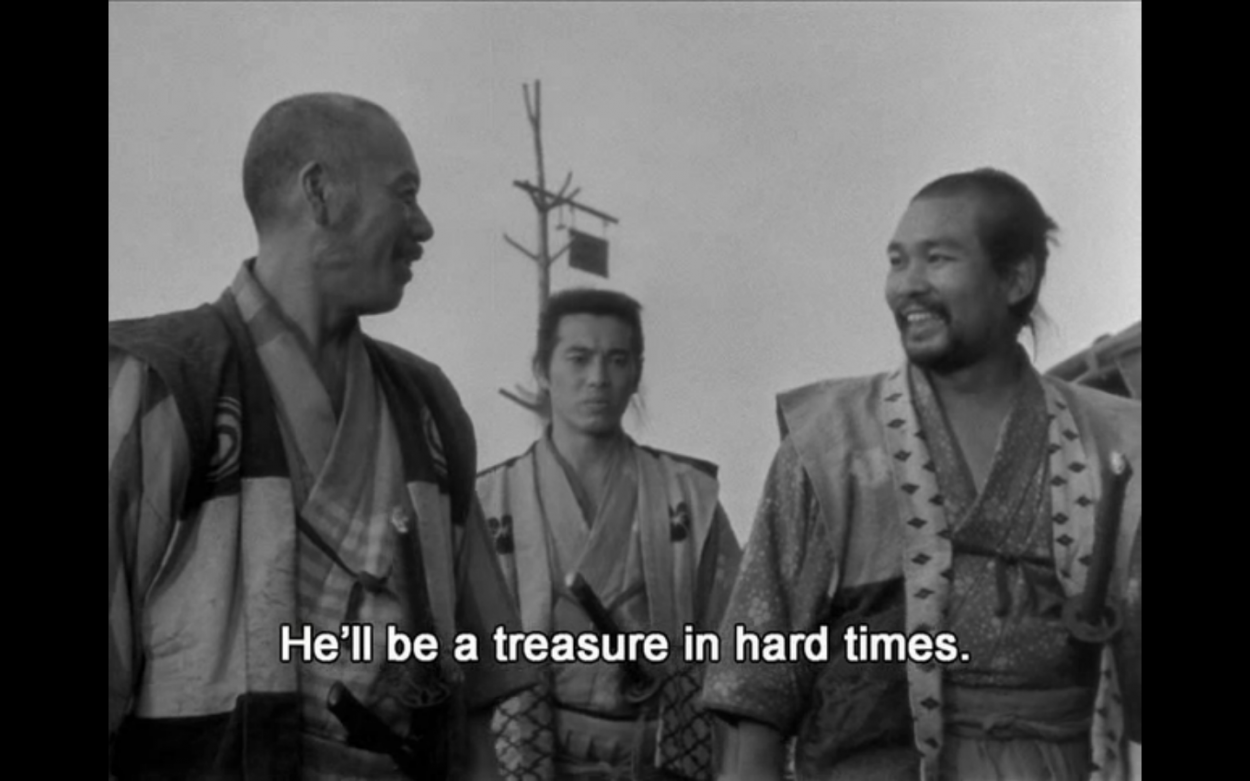
One thread connecting two seemingly disparate stories. Just go with it.
I've been thinking about block printing lately and our recent viewing of Kurosawa's Seven Samurai, which is AWESOME, gave me lots to get excited about. The story centers on a community of farmers and a collection of samurai. Viewing of the three hour masterpiece spanned the entire weekend. Lingering thoughts on the film and its characters were interspersed with a road trip out of town and into Texan farmland.
We took a day trip to the Northern European part of Texas, 90 miles west of Houston, where immigrants from Germany and the Czech Republic (formerly Moravia) settled, fleeing the Austrian Empire. Our main agenda was to take a tour of the "painted churches." These are turn of the century farm churches, often far from the next town. Though the exteriors are simple and the surroundings, farmland, the interiors are exploding with color and design.
Queen of the Painted Churches, St. Mary's at High Hill.
St. Mary's Church of the Assumption, Praha, Texas.
I'm really into these panels framed with flora, but completely absent of fauna. I know it's supposed to be paradise, but it seems post-apocalyptic. Stay tuned to see something similar from a synagogue in Venice.
Sts. Cyril and Methodius, Dubina, Texas. Built 1876, rebuilt 1912.
Inlaid marble cross leads the way to salvation.
Most of these churches have outdoor restrooms. This one is labeled in both English and Czech.
In Shulenburg we passed a Czech bakery. After a quick and excited turnaround we were in line staring at the variety of kolaches, basically a filled pastry. I've seen kolaches all over Houston, but they're notoriously non-vegetarian. However, I learned that the traditional kolache is filled with poppy seeds, sweet cheese, or fruit.
Later that day while wandering around La Grange I spotted the Texas Quilt Museum. We had fun looking through the beautifully preserved 19th century building filled with all kinds of hand made quilts. Now I want to make a one like this antique paper cutting style.
But back to the Samurai.
The plot in short: a village of farmers intend to keep safe from the bandit's harvest time plunder. Their strategy is to employ samurai, basically another enemy to intimidate and kill the roving bandits. The story is set in the 16th century, medieval! just the way I like it, and is gorgeously shot. There are so many wonderful things to say about Kurosawa's film (see Alex), but I want to focus on the Academy Award nominated costumes by Kohei Ezaki.
They're lovely. And full of fantastic prints. I'm always looking for the detail work in any art form and it's plentiful here. Kurosawa was known for considering historically accurate dress and I think it shows. You can really imagine the feel of these organic fibers, cotton, linen and silks, hand dyed with local plants, and stamped by hand with wood block prints.
Medieval era samurai, and some farmers, typically wore three garments: hakama, kimono, and kataginu.
Heavily pleated hakama on the left paired with printed kimono.
Kataginu, sleeveless jacket with bold shoulders.
Probably my favorite print, a bow and arrow feather repeat across the back of Kikuchiyo's kimono.
Anokhi, a pioneer of hand block printing for the export market,is known for its success in preserving and revitalizing traditional Indian textile skills, and for its involvement with educational and social projects in Rajasthan, India.
Each pattern starts with carving one to thirty print blocks out of teak and then applying the pattern with vegetable dye on the highest quality material, usually a sublime gauzy cotton. I have one stunning vintage Anokhi piece in my closet (I'm guessing mid 70's era, found at the Salvation Army in Philadelphia). Even though the skirt is almost entirely covered with color, you can see bits of the pure cotton in between. The construction is also meticulously done with side pockets, side buttons, French seams, and a delicate trim below the skirt yoke.
It's strange staying in bed during the day, but I need to combat my everlasting cold. I made the most out of it by playing two movies which seem to have quite a few things in common.
Number one: they both made me laugh my ass off. Good medicine, right?
Sacha Baron Cohen in Brüno, 2009
I have a crush on SBC, always have. He's amazing. Well educated, interested in religious and cultural affairs and current issues, unafraid of making the world uncomfortable for the sake of social progress. Also: incredibly funny. And good looking. And he speaks German in this one. Swooon Schatzi.
I love LOVE everything about this movie. How have I never seen this before?
Louis CK's Pootie Tang, 2001
I especially love Wanda Sykes, as Biggie Shorty, giving her best Lady Miss Kier moves.
#2: Both lead characters, icons really, are true individuals. The attention to style and costume in these two movies is totally inspiring and satisfying.
#3: Both struggle against adversity, whether it's homophobia, xenophobia, malt liquor, or corporate America. I thought the gay conversion segment in Brüno was especially heartbreaking and the Pootie Tang PSA's encouraging healthy lifestyles, equally heartwarming.
*too much information warning*
In Pootie Tang there's a small part played by an intense comedian poet I met at the Flea Theater in NYC and briefly dated.
The Ben Franklin Bridge in Philadelphia from Brian De Palma's Blow Out(1981).
Hey. I don't remember seeing the poster for this film at the Philly airport. I guess it's because of the Liberty Bell Strangler. Bummer, because it really captures the essence of the city.
It's always strange revisiting the places of past lives (I was in Philadelphia for five years). The main reason for my somewhat capricious trip was, as I mentioned earlier, to attend the symposium on the reception of medieval sculpture. Two full workdays of lectures on medieval art. In Jamie dialect: magical elixir of happiness.
I left Houston at 4am and went straight to the Penn Museum for immediate immersion. Hours later I emerged with my fellow medievalist, a Tufts colleague and current Penn PhD student. We raced over to the Philadelphia Museum of Art for another lecture given by the curator of sculpture at the Louvre. After: well earned drinks at a new Stephen Starr restaurant on N. Broad, Route 6 (maybe a reference to the road through Cape Cod?). It was actually really good, though I usually don't like his style over substance strategy. Check out the gourmet unexpectedness of the fresh fish sandwich and whoopie pies.
I wasn't asleep until well after midnight. I was too delirious, too excited about my bold introduction to a certain senior scholar who did in fact flash Ripoll on the screen during his lecture. I'm still somewhat shocked at my confidence as I waited patiently to introduce myself and my parallel research interests. Professor was very enthusiastic. After our animated chat he handed me his card, wrote his personal e-mail (which enables him to exchange large files), and encouraged me to submit my paper to a conference taking place in Ripoll next year. YES. The next day he remembered my name and introduced me to another student who is writing his thesis on Ripoll. Truly a major moment for this art historian.
Only for art history would I wake up at 7am on a cold Saturday morning. I met with my Tufts friend and her Penn classmates and together we settled in for eight hours of lecturing. Though there were many interesting topics discussed, from performativity in medieval art to the erroneous placement of medieval art in modern museums (looking at you Yale Museum) to 19th century restoration work on a medieval portal, I think everyone in our group agreed that the best all around lecture was by Georg Geml from Vienna. His paper was entitled "C'est un saint qu'on ne fete plus": On Images of John the Baptist's Passion in the 19th and 20th Centuries and it was all about gory Counter-Reformation style Johannesschüssel:
Johannes-Schüssel aka St. John's Head on a Platter.
Oh those Germans.
The best one Geml showed, from a museum in Cologne, had more guts trailing out. I couldn't find it online. Better get back to Germany soon.
TRAVEL NOTES:
I learned from my weekend roommate that the neighborhood around 12th and Callowhill is known as Eraserhood. I never knew about this. Better revisit the Lynch classic.
From our place in West Philly I took the 64 bus to Federal Donuts in South Philly. I love taking the bus around Philadelphia and I love donuts. Especially green tea sesame ones. Sesame!
My last minute attempt to see the revamped Barnes on the "Champs-Élysées" was not rewarded. Apparently you still need to reserve a month in advance. I am slightly outraged by this exclusionary policy. Isn't that why they moved the collection to Center City? I'm an art historian! Without people like me (ok, people much more scholarly than me) no one would understand the value of these works.
The Art of the Steal.
Better to stick with fond memories of the original and forget about the scandal? What about the glowing NYT review? I have mixed feelings over all of this.
After my donuts and a nice tea date with my American Swedish Historical Museum friend (+her two year old and still growing baby-in-belly!), I walked from South Street to Ritz at the Bourse to see The Loneliest Planet. This is the same theater I rushed to post GRE to see The Science of Sleep. I have a crush on Gael Garcia Bernal oh do I. Also, this film takes place in the Caucasus Mountains of Georgia, near my favorite, Armenia. I was intrigued by the simple, but layered plot, which I won't say much about here. It was an appropriate choice for a solo attendance on a cold and grey afternoon.
The Loneliest Planet, Julia Loktev, 2012. Hani Furstenburg, on the right, is radiant.
She reminds me so much of Bergman muse Liv Ullmann.
Spare and provocative, somewhat flawed, but I appreciated the restraint from indulging in exposition and useless filler dialogue. Without these, the simple events take on an intensity that includes the audience in a dynamic way. This is again a kind of Mona Lisa painting: with little information, you're left to your own unique interpretation. One of the lighter topics that resonated with me was the feeling of traveling.
During our summer adventure I remember when I started feeling homesick. It was in Athens, week 3. A day or so later I was happy to continue traveling on and on to new countries forever. I realized that I thrive on adapting to new environments, which is why I enjoy the small tortures of relocating frequently. Within disorientation the potential for exhilaration increases. Traveling is when you are truly awake, all senses are open and receptive, passive moments are rare. I am especially interested in the way you learn about yourself. Both through the context of others who seem very different from you, but in fact have many similarities of course, and how you negotiate traveling situations, especially crises.
Cultural observations in Turkey by artist extraordinaire Alexander B. Teich.
Museum of Turkish and Islamic Arts. My dream job.
As soon as we returned home I experienced a deep melancholy and desire to be back on the road in Europe. I missed traveling. So I set about planning our next trips. To Los Angeles and another to New York. And there I go to Philadelphia. It's not that I don't like being in Texas, in itself a great new adventure, it's just that I love being a part of the traveling experience; from rushing through the airport toward your departing jet to reunions at arrival (mine or others, I love airport reunions), reading maps, constructing itineraries, getting lost, making new friends from strangers, seeing how people are dressed, learning new words on the spot of necessity, testing personal relationships and communication while constantly negotiating new terrain, trying new food, understanding rituals of all kinds >> cultural explosion. My idea of home must have changed, probably for survival's sake, along the way.
I'm starting a top five in five years travel plan. These selections are based mostly on art history and culture, of course. So far:
-Mexico
-Morocco
-Japan
-India
-Egypt
*if, in the next five years, relations with the Middle East improve, then include one or more:
-Syria
-Iran
-Afghanistan
Big plans.
Imagining that I was in De Palma's Philadelphia or even Lynch's Eraserhead, I marched around with Siouxsie and the Banshees' Kaleidoscope (1980) playing on repeat, loudly. The entire album is cinematically atmospheric, the sounds threatening and seductive. It was the perfect soundtrack for today's Philadelphia, which despite gleaming new developments, retains some of that old grit and menace.
I'm consistently drawn to the expression of proto-cinematic movement in art that predates the motion picture. I'm always on the lookout for it and have seen examples in everything from prehistoric cave paintings to ancient Greek vessels to, as I argue, the Romanesque portal sculpture at Ripoll.
I pulled this from the Tufts Art History site:
Professor Martin Schulz, Academy of Arts, Karlsruhe, Germany, describes his lecture: "Animated and Animating Landscapes: Space Voyages and Time Travel in the Art of Pieter Bruegel the Elder."
"The lecture will explore the famous painting "Hunters in the Snow" by Pieter Bruegel the Elder. I will focus on the spatial effect of the landscape as an animation of the gaze and a translation of images through and across different media: from illumination via drawing to panel painting and finally, in a long leap ahead, to the immersive possibilities of film, video, and many digital based images.
I am going to argue Bruegel's landscape appears to have a pre-cinematic quality. The immersion of the gaze lends itself to a travel through time and space from the depictions of the months in the medieval books of hours up to the cinematic adaptation and transformation of the painting, as it was accomplished by Andrei Tarkovsky in his film "Solaris" from 1972. This leads to a crystalline compression of space and time, in which past and present, actual and virtual space, material and mental images, painting and film and, not least, technology and gaze permeate and determine each other."
Sounds like a very interesting paper. Space Travel!
If you're around Houston this weekend and like creative stuff, you should take part in Art Workshop: Dyeing in America at Bayou Bend. Make your own organic pigments with textile expert Katie Knowles! Ever since my short stint at the Fabric Workshop and Museum where I created unique chemical dyes in the dye lab, I've been interested in mixing colors. Our summer adventure included a trip to Ikonium, a felt making workshop, where they also make their own organic dyes for wool and silk. The end results are gorgeous. I'm totally going to start doing this on my own. Look at these colors made from onion skins!
1. January 2012: Paris, Institut national d'histoire de l'art (30-31 January) (with study sessions at the Musée du Louvre)
2. May 2012: Kalamazoo, Medieval Institute Annual Conference
3. November 2012: Philadelphia, Phila. Museum of Art & Univ. of Pennsylvania(with study sessions at the Philadelphia Museum of Art and Glencairn Museum)
I didn't make it to the first two conferences, but the third is the most interesting to me anyway. I'm especially excited about this lecture: They Are All the Work of Artists (Jer. 10, 9): The Romanesque Portal as Liturgical Performance, Manuel Castiñeiras, Professor, Universitat Autònoma de Barcelona. I can't wait to hear what this Catalonian scholar has to say regarding the expression of liturgical performance in Romanesque portals. I wonder if he will mention my beloved Ripoll, which has sadly been ( temporarily!) abandoned by me. I have very high hopes for this conference as it, in many ways, falls in line with my QP topic from Tufts. Now that my library has arrived from Boston I can get back into inspired research and finally open that major book I actually bought at Ripoll.
¡¡Me at the Ripoll portal!! September, 2011.
To get in the medieval spirit and because it's Halloween, we watched Army of Darkness last night. It's fantastic and Bruce Campbell is dreamy.
Soga Shōhaku, Western Hunter, c. 1765–70, ink and color on paper, the Kimiko and John Powers Collection of Japanese Art, MFA Houston
On the last day of the exhibit at the MFAH I saw Unrivalled Splendor: The Kimiko and John Powers Collection of Japanese Art. This was preceded by a fascinating talk by John Carpenter, curator of Japanese art at The Metropolitan Museum of Art, entitled "Interaction between Text and Image in Japanese Paintings." My companion may have nodded off from time to time, but I was absolutely riveted during the talk, not by Mr. Carpenter's speaking style, but by the content which was mostly familiar but still exciting.
Though there were many beautiful and intriguing works, one of my favorites in the show is the above Japanese painting of a European. I love these kinds of paintings because they are so rarely shown in art history. We Westerners usually only see or critique depictions of "the Other," a term that encompasses anything other than white and Western. It seems that, for a more complex understanding of the world, we should analyze how we are seen by our others.
The last three weeks have been full of cultural adventures. Here are some recommendations and interesting things to inspire you.
HOUSTON:
This weekend we met up with a friend of mine from Philadelphia. We go way back to pre-graduate school German classes on Spring Garden Street. These days, she's in a PhD program close by in Austin. Hooray for old friends together in new cities! Together with her sweet Texan boyfriend, the four of us (two art historians and two mathematicians!) wandered around H-town.
On the stereo:
Dave "Diddlie" Day / Tony Ray Combo - Blue Moon Baby, 1957. Love that organ.
Drinks: Pliny’s Tonic with Gin, Lime, Cucumber, Mint, Habanero Tincture. In my favorite neighborhood, Montrose, at Anvil. I love spicy drinks (recall my ongoing obsession with chai). For great Mexican and a KILLER spicy drink, I also recommend Ninfa's On Navigation for a spectacular mango margarita with habanero. There are no better drinks anywhere.
Art:
We were excited to catch The Artist is Present, a documentary on the artist Marina Abramović, at the MFA Houston. Claire, Alex, and I had seen, and were stunned by, her retrospective show at the MoMA in 2010.
It's an incredible documentary, she's an incredible woman, and everyone should watch it. I still can't believe I witnessed this art historical milestone. Just thinking about it gives me goosebumps.
Afterward we looked at Constructed Dialogues: "Concrete, Geometric, and Kinetic Art from the Latin American Art Collection." The mathematicians loved it. Thanks to our awesome curator, Mari Carmen Ramirez, Houston has a super, fantastically extensive Latin American art collection. Read more about dynamo Ramirez and her career trajectory here.
Next stop: the Menil, one of my favorite museums, for the Silence exhibition. This show had a kind of connection to the Abramović doc. Her idea for the in-museum performance, "The Artist is Present" at the MoMA, came from an earlier ongoing performance piece, "Night Sea Crossing" from the 1980's. Together with her collaborator and lover, Ulay, Abramović sat for days on end, in different locations, with no talking, no eating, no moving. One of the major points in her most recent performance was to maintain silence and stillness in order to slow time down and enhance and uncover the feelings created by the experience. The sustained eye contact and shared physical presence of another person, with no talking or moving or any other diversion, has the potential to shock the human system. At least those humans that are accustomed to short attention spans and overindulgence in sensory exploration. For me, even watching the performance on video is viscerally jarring and moving as it intensifies the minutiae within silence and stillness.
Night Sea Crossing, 1981.
The curated works at the Menil, with the theme of Silence, often evoked Jacques Derrida's concept of sous rature (under erasure) in which words or images that are crossed out are even more enhanced. Many of the artists represented wished to include silence as a valuable medium, especially the composer John Cage. The exhibition coincides with and celebrates what would have been his 100th birthday. Cage thought that the absence of sound or conventional music opened up a deeper perception in listening. So the partial excision or layering over of text, music, imagery, places a greater focus on the experience of reading, hearing, looking. In paintings Jasper Johns called this as "additive subtraction." I was thrilled to see and interact with Robert Rauschenberg's seminal White Paintings from 1951 which inspired John Cage's 4'33" and perhaps Abramović as well. Works by the three artists involve the participation of audience. As usual taking in all this creative output made us hungry. We drove a few minutes downtown to Bombay Pizza. Yes! Italian and Indian together. Best pizza: Mr. Nehal's (tandoori paneer with bell peppers, red onions, mozzarella and Bombay pizza sauce, topped with fresh ginger). The pizza crust was thin and crispy and coated with black sesame seeds. I'm obsessed with sesame seeds in all iterations from Japanese to Middle Eastern to NY bagels. LOS ANGELES: Last week we visited Los Angeles mainly for a wedding, which included a mariachi band and Brazilian dancers, but of course we fit in some cultural explorations. I love LA so much.
Curious X-ray Giraffe Deli in LA.
On the stereo: Nothing. Our super cheap rental had no radio at all. Sights: On our first night we stopped off to see the Walk of Fame and all those handprints at Grauman's Theater. I'm glad we went after dark, that's when it gets really atmospheric. We agreed that walking around those old prints and signatures was totally creepy. The next morning we headed straight to Malibu (or Pacific Palisades) to see the Getty Villa.
Ancient Greek Vase with proto-animation style, Getty Villa.
Fayum Period Sarcophagus Portrait
The Villa, filled with thousands of antiquities, features reproductions of ancient Roman architecture and gardens. They had an interesting exhibition called The Last Days of Pompeii. The show mixes works from all over the timeline, including Warhol, B movie footage of ancient Rome, and paintings from the turn of the century inspired by the novel of the same name by Edward Bulwer Lytton (1884). I also learned about Gradiva, a novel by Wilhelm Jensen. The concept behind this is fascinating and I'm looking forward to reading his book.
Written in 1903, Gradiva is the story of Norbert Hanold, an archaeologist who becomes obsessed with the image of a young woman in a classical marble relief that he sees in a Roman museum. Harold names the woman in the relief Gradiva, the girl splendid in walking.
Overcome by longing for this woman and consequently in a delusional state of mind, Hanold travels to Pompeii in search of her. In Pompeii, believing that he has traveled back in time, he locates the woman whom he believes to be Gradiva, but who is actually a childhood friend of his from Germany. This woman, understanding what is happening to Hanold, helps him by accepting it fully and playing the role which he has assigned to her. The concept of Gradiva served as a muse to many of the Surrealist artists and writers. It reminds me of some of the Latin American magic realism books I've read by Julio Cortázar and Márquez and that other one about the mysterious gypsy girl. I can't refer to my library because my entire collection is STILL in storage. Fine. I haven't seen Ruby Sparks yet, but it looks like a cute, modern version of similar concepts. Compelling. Plus, Steve Coogan! I'm in.
Ruby Sparks, 2012.
Toward the beach! Culver City: The Museum of Jurassic Technology. This place was highly recommended to me by a Tufts colleague/LA native. I had no idea what to expect and my mind was blown. It's the kind of thoughtful, genius museum that I dream about and obsess over. I don't want to say too much about it because the mysteriousness is part of the experience. Amazing. Amazing. Go. In one room we saw The Floral Stereoradiographs of Albert G. Richards. On the wall were several pairs of special glasses which when worn made the floral images 3D. All the while dramatic music played. I was the only person in this claustrophobic gallery draped with black velvet. The combination of the waving ghost flowers, reaching toward me from all around, and the music, scared the hell out of me. I loved it. How many times have you ran skittishly from a gallery? Not counting the Mütter Museum with its saponified lady.
Star Magnolia.
Once you make your way through the absolutely fascinating galleries, you are rewarded with a staircase ascent, lit by sconces with actual candles (fire in a museum gave me a shock), leading to a cozy tea room with a samovar and plates of cookies. Totally charmed, we took our tea and cookies out into the aviary courtyard. WHAT.
The Museum of Jurassic Technology, LA.
Just go, you'll be so happy. Afterward, go to Santa Monica for tacos drenched with spicy red sauce at Tacos Por Favor and pumpkin pie and decadent chai at Urth Caffe. We also fit in some important tourist sites: Little Tokyo for some streetside Japanese octopus balls and fresh red bean cakes, the house where Nightmare on Elm Street was filmed, the house where Michael Jackson's Thriller video was shot, a late night, first time visit to Amoeba Records (where I found one very special rare LP, which I am so so so excited about)...
Together with a couple more formerly Philadelphian friends, we finished the evening at the Silent Movie Theater for a midnight screening of Argento's Inferno.
Incredible underwater scene in Dario Argento's Inferno, 1980.
MORE NOTABLE FOOD:
Probably my favorite wasViet Noodle Bar in Atwater Village. I tried their house made black sesame soy milk and wished I could swim in a sea of it. The other stuff was great too, white fish with turmeric (a delicious anti-bacterial wonder spice) and noodles, jack fruit everything, tofu bahn mi. I really wanted to go back another time, but there were too many places to try. We had exceptional Japanese, Thai, Mexican, six times, and Californian cuisine. Also LA has the best tea selection and presentation of any other city so far, but I still haven't been to England or Asia (Major), so maybe my opinion will change.
Tomorrow we're off again to another wedding, this time in New York. Planning my art/food tour (and wedding speech for an audience of 350, yikes). Ciaociao.
For the first time since high school, I have cable TV. This is great news for my current insomnia, induced by the too quiet streets and the possibility of lurking bugs and silent killers. Plus we have a lot of catching up to do since we only saw TWO movies all summer. Oh man, were we craving movies in Europe. We did see To Rome With Love, in Florence and The Dictator in Athens. That one, silly, but satisfying, was outside with a view of the Acropolis! It was hard to stay indoors though and we only did so when absolutely forced, by the unrelenting heat, to take a siesta. La Bamba, (1987)based on the true story of Ritchie Valens, was on last night and so we said yes, let's watch it. Both Alex and I remember watching this (and Overboard) repeatedly when we were 10 or so.
What a tearjerker! There are so many emotional threads especially dealing with family strife; tenuous sibling relationships, Cain and Abel tinged disappointment and competition. Fears, disabled apotropaic devices, and deadly wintery weather eventually mix together in tragedy. That last phone call Ritchie makes to his brother is heartbreaking! Wow. I never realized how much I love family movies.
I also noticed the costumes this time. The 50's style is marvelous! I love those vintage outfits, from the shirt dresses with feminine sweaters to the dark blue jeans rolled up with T-shirts and old man cardigans. Oh and I really want a leather jacket. My dad has a great one, but he said I'll have to wait awhile longer til it's mine. Well, it's still 90 outside, so maybe a leather vest to put over my white T? These, with a little Mexican twist, are the looks inspiring my "fall" wardrobe. Ok. I'm off to mine the thrift stores.
One part Audrey Hepburn in Roman Holiday...
With cat eyes!
one part Japanese version of American rock n' roll in Mystery Train...
Add a little bit of print and color (Dolce and Gabbana).
AND one part rebel biker style. Yes, I want to dress like Marlon Brando. So?
Around the same time as I was watching this movie in the 80's, my grandfather introduced me to classic country western music which I loved. My absolute favorite was Marty Robbins, especially El Paso. This will be the soundtrack to my southern fall.