Showing posts with label Travel. Show all posts

11.12.2013

Europe 2012: What Did I Miss?

In Italy:

The Bargello Saracino, 1579, Florence, or so I thought.

This guy, a good looking wooden jousting target constructed for rude Renaissance era festivities, captivated me during grad school. There is very little data on his history and the only book that mentions him at all is in Italian. Even though I didn't expect to meet him so easily, I combed through the Bargello, where he is a supposed resident, with no success. I tried asking museum personnel, in poor Italian I admit, but they had no idea. It didn't help matters that there is no artist or title, oh you know the Renaissance sculpture! Its status as a sculpture is even tenuous. Luckily everything else in the Bargello is spectacular. I'll be back to find you Saracino!


The detail put into this is so intriguing. 

Catacombs in Rome. 

Sad, but it was too damn hot for a walk along the Appian Way. Next trip to Rome will take place during reasonable temperatures. Oh, but aren't these early Christian paintings incredible?


Bearded Christ in the Catacombs of Commodilla


In Turkey:

Hagia Eirene, Istanbul, built in the 4th century.

Once in Turkey I learned that the Hagia Eirene is only open for concerts and there weren't any during the two weeks we were there. This former church is remarkable for its interior decoration, an unadulterated example of the Christian iconoclasm which lasted roughly from 754 to 843. All of the figural painting had been whitewashed, a common tactic less reversible than adding plaster which is what the Muslims did.

During Iconoclasm figural representation was criticized for encouraging outright idol worship from earlier Pagan practices. Crucifixes, vegetal scrolls, and Biblical text were used in favor of the well known characters.


Hagia Eirene, Istanbul


9.13.2013

Two Exciting Works at the Philadelphia Museum of Art

On my last visit to Philadelphia I found myself wandering around the great museum there (surprise surprise!). I made a quick pilgrimage to some of my old faves, but as it happens with art and museums, the more you look, the higher the chance you discover something you hadn't noticed before. Of course, I was hanging around the European art galleries mostly (although I did drop in on Joseph Cornell).

My photos couldn't capture the magic, but these paintings are worth spending a generous amount of time in front of. Both of these works are predella panels from different altarpieces. A predella is the space beneath a grand altarpiece. These spaces are usually filled with small scale narrative paintings that relate to and expand on the more well known religious events depicted in the altarpiece, which are usually something like a crucifixion scene or the annunciation. 

Agnolo Gaddi, The Legend of St. Sylvester, 1380, tempera with tooled gold, Gallery 210, European Art 1100-1500, second floor

In Gaddi's painting, Pope Sylvester I (d. 335) binds the mouth of a dragon, sealing off its poisonous breath, and revives two victims who lay prone in the foreground. The crowned observer on the right is the Roman Emperor Constantine the Great (ruled 306-337), who, according to legend, had been cured of leprosy by Sylvester. 

Dragons painted in this era are always interesting subjects, formally. I especially like how this dragon is a pet sized cutie and how tenderly Sylvester seems to be interacting with it. 

Botticelli's The Last Moments of Saint Mary Magdalene, 1484, tempera

Tempera as a painting medium can be sublime. Because the artist mixes pure pigment with a binding agent, egg yolk, and water to thin, the translucency of the quick drying paint works well to create a mystical world. Very fitting for the religious paintings found here and throughout the middle ages toward the Renaissance. 


Look at Magdalene, a lovely 15th century Cousin Itt. Depicted as a mass of golden hair, she's a face less apparition, a symbol floating on curls. Instead of these figures appearing fully corporeal and integrated into the architectural space, their presence hesitates, flickering as if flames of a candle. The impermanence and delicacy of life is in contrast with the strength of the Pietra Serena in this Brunelleschi-esque building.

Some art historians say that the transparency shown here is the product of a mistake or somehow unintentional. Whichever the case may be, I think it's pretty spectacular and very effective.

Chills!

12.09.2012

Art of The Jewish Ghetto, Venice, Italy.

The history of the word ghetto, in the modern sense, begins in 16th century Venice. The Republic there made an official decree that those Jews (Ashkenazi from Eastern Europe) coming in large numbers to the city must live and work in a restricted area. This area was the part of the city where metal foundries (geti in Venetian dialect) had been situated since antiquity. Since the Jews did not speak Venetian, the pronunciation of geti became corrupted and evolved into today's definition of marginalization, ghetto.

The Jewish ghetto is a small island in the Cannaregio sestiere. During the 16th century two bridges, which connected this island to others, were raised at dusk and gates were locked so that no one could enter or leave.  It was also in this area where we see the beginnings of tenement style housing. In order to fit as many people as possible on this tiny island, buildings were built to be up to eight stories high which was very unusual for Europe at that time. Even today there are few buildings this tall in most parts of Europe.

Tenement housing in Venice. 


On our second day in Venice we got up early for a guided tour of the Museo Ebraico and the five 16th century synagogues in the Cannaregio sestiere. These synagogues are located on top of pre-existing buildings. You can spot them, though they are understandably secretive, by a five window repeat on the facade and a small dome. 

Five window facade (top floor) denotes a synagogue.

The dome of the Canton Schola, side view.

Each synagogue is associated with a different community, such as Spanish, Levantine, German or Italian and each practiced different Jewish rites. The Canton Schola, which practiced the Ashkenazi rites and holds only 25 people, was founded in 1531. It was heavily restored in the 18th century which explains the ornate baroque interior. 

What really struck me as we toured around the Canton Schola were the eight wooden panels showing Biblical episodes from the Book of Exodus: the city of Jericho, the crossing of the Red Sea, the altar for the sacrifices, the manna, the Ark on the banks of the Jordan River, and Qorach, the gift of Torah and Moses that makes water flow from the rock. As we know, Judaism as well as Islam, prohibits the use of figural imagery in religious art. There are exceptions of course, ancient Dura Europos being one of the most famous.

Moses leads the Jews across the Red Sea. On either side of Moses and the hands of God, are Egyptian soldiers. On the left you can see that they are in order, however, as the sea is recombined on the right, they are drowned.
Wall fresco, Dura Europos Synagogue, Damascus, Syria, 3rd c.


Here is the same narrative, from the 16th century Canton Schola, boiled down to the absolute essentials.


The Red Sea sans Moses.


In these panels, the figures, which in most cases are important aspects of the narrative, are completely excised. I wasn't surprised at all by this, but my response was interesting. After looking over the panels carefully for several minutes it seemed to me that the absence of these figures only made their presence much stronger since my imagination was required to animate and fill in the missing elements (going back to Jacques Derrida's sous rature). This was such a thrill and for the rest of the tour I kept thinking about my experience with these Jewish panels and wondering if this kind of response was the intention of the artist or religious edict. My instincts say yes, in the case of Judaism where the literary device midrash encourages imagination and the Islamic use of geometry as a means to divine transcendence. I'm looking forward to learning more about these ideas as they relate to the intention and reception of religious visual art. 

Of course we weren't allowed to take photos, but luckily I found these postcards in the museum gift shop. Look closely at the modern, graphic articulation, reminiscent of tiny stage sets. These are prized objects of mine and I'm happy to share them.

Jericho.
Manna.
Wait! There's an arm!


9.24.2012

Travel Tips From My Summer Adventures.

Before I get into the art stuff, I want to mention a few of the indispensable items that kept us happy for our two month trip.

1. Maps and Travel Books.

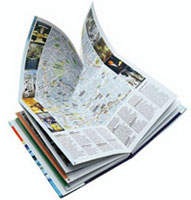
I don't like to bring those very thorough, yet totally unwieldy 500 page travel books. I have in the past, but this time we were packing light. Carry-on luggage only! The best solution for a slim site seeing book with great shopping and eating picks PLUS manageably sized maps is the Knopf MapGuide.


The genius behind these books are the fold-out maps. Here we have an example of useful origami! The image above shows, on the left, a description of the neighborhood and a small map to mark its relation to the rest of the city. On the right you find restaurants, cafes, bars, and shopping. Once you flip the page from the bottom up you will find a larger detailed map and cultural destinations listed along the bottom.


Snacks in Rome. 
Looking for a pizza rec in Flo.


A long leisurely dinner at La Beppa near St. Miniato in Florence. 
On this night we had the best pizza of our entire trip.
Thank you guidebook! GO THERE.
Planning tomorrow's Florentine adventure.
With this classy design you actually want to display your travel guide.
On the train from Padua, heading toward Venice.

From Venice to Athens!
Passports in hand! Next destination in the bag.
En route to Istanbul via the seaside airport in Iraklion, Crete.

Surprise upgrade to FIRST CLASS. Thanks to Turkish Airlines we flew to Stockholm (with our MapGuide in place), surrounded by complete luxury and lots of space. What a lovely experience.
Now you can see some of the major cities that we traveled to: Rome, Florence, Venice, Athens, Istanbul, and Stockholm. Lucky for us there was a book for each one on our itinerary. Knopf MapGuides are not published for every destination under the sun. I kind of like that they are selective. Our future trips will have to be based on which cities they offer.

Take note:

Make sure that you always get the most up to date edition. For some reason I ordered an older copy of Athens and it turned out that many of the recommended places had closed. This was especially devastating when we went looking for Greek bakeries. Not getting those lovingly described pastries at the end of a long, sweaty trek is the worst. 

Although the recommendations for food, shopping, and top ten neighborhood sites were always fantastic, these guides do NOT offer extensive information on works of art or architecture. You will need supplemental books if you want to learn about these things while you are looking at them. We saw a lot of people reading from their books in churches and museums. We didn't really need them in this case, since I am an art historian after all. However, we did get some small art books here and there along the way just to be sure we didn't miss anything. Even though we filled every single day with a dozen stops, barely remembering meals, seeing way more than I thought was possible, we still managed to miss a few very important things...

Like Bernini's 17th century St. Theresa in Ecstasy in the Cornaro Chapel at Santa Maria della Vittoria and Bramante's Tempietto. I am utterly devastated that these were in reach and went unnoticed. More trips to Rome!


Tempietto, Rome


Completed in 1508, Bramante's Tempietto was modeled after the early Christian Roman martyria. It was thought that this spot, where the "little temple" stands, is the site of St. Peter's crucifixion. Bramante was one of the architects involved with St. Peter's basilica in the Vatican City. Even though the basilica did not follow the central planning that Bramante wanted, his plans for the dome, finally designed and built by Michelangelo later in the 16th century, were partially included in the final product.

St. Peter's Basilica, Rome

2. Camera case. 

This was such a good investment for us. Twenty bucks probably saved us another 700 and possibly invaluable documentation. I have a history of bad luck with digital cameras. I usually break them while on important adventures. This has happened three times already! First in Berlin, a separate trip in Stockholm, and finally last year in Barcelona. That was the most painful occasion since I had traveled far to see the church I had written about during my graduate program. Luckily we had a film camera so I was able to take a few pictures for my archives. I also invested ninety euros in a very thorough book I found in the makeshift souvenir shop. It is massive and filled with hundreds of images that were taken with a crane. So this story turned out okay, but we were determined not to be foiled again.

Part of the problem here is the lens. If the lens is mechanical, the camera is more susceptible to malfunctioning. If the lens can't open, then the entire camera is unusable. This time we got a Nikon1 which has a manual lens and a nice leather case for complete protection in case it gets dropped. You can wear the camera on the strap instead of fishing it out of your bag and then throwing it back in. This setup made taking 7000 photos easy, exciting, and somehow a little bit classier. Of course I still took lots of pictures with my phone like everyone else.

A Pentax photo on real film! 
But notice my Nikon digital camera all safe and cozy, Roman Forum.


3. Avene Products. Especially SUNBLOCK.


You really need good sunblock (and a hat) to brave these cities in the summer, especially if you've ever had the lucky chance to have some mysterious mole carved out of your leg and are now terrified of skin cancer. On our first day in Rome we went to the apothecary and consulted with the saleswoman. She took one look at our pasty white skin (summer hadn't reached New England yet) and recommended a French brand, Avene, which uses thermal spring water as its base for every product. The best option for us: very high protection, very water resistant 50 SPF.

This is the good stuff. We never once got a sunburn, which is saying a lot considering how much time we spent outside in the sun. We barely ever saw any clouds at least for the first month, only a lot of sunburned tourists. It's so water resistant that sometimes we didn't have to reapply every day even after sweating, swimming and/or showering. I also discovered some of the other marvelous Avene products such as thermal spring water in a can. These spray cans became indispensable for refreshing cool downs and energizing sweat cleansers. 

Now that we live closer to the equator, I'm using Avene now everyday, all year, forever. 

In conclusion: I highly recommend these travel products for a safe and happy adventure of any kind! 


7.27.2012

Moni Dafniou, Attica.

Today was a big day for this art historian as I got a chance to climb the scaffolding inside the 11th century Byzantine church here. The monastery and church, which stand on the site of an ancient sanctuary of Apollo, were severely damaged during an earthquake in 1999. The site had been closed until recently. Even now the hours are strictly limited: Tuesday and Friday from 9-2. As we headed back to Athens from the marina at Piraeus our lovely taxi driver made a detour (and happily accompanied us inside) to Dafni (Daphni, Dafniou). Photography is forbidden, this is no longer a surprise, but the plasma screen television that runs through a collection of photos captures the details of the Byzantine mosaics. These are photos of the screen.

We were able to see many of the mosaics, including the famous Crucifixion, but not the pantocrator Christ in the dome. I suffered a temporary heartbreak, but again this is something I'm getting used to. On one of our first days in Rome we raced to see Borromini's spectacular dome only to find that we could not enter. That first disappointment sent me into overwhelmed tears, but I'm seasoned now! We finally got in after the third attempt and it was stunning. Finding my way to certain works of art has often been, sadly, unsuccessful. I long to meet these. Later I plan to talk more about the things I didn't see, and the reasons why.

But here, notice the depiction of John baptizing Christ. It's a nude Christ! Very rare and beautifully done. Also, here is the dome mosaic and this new way of showing Christ, as a judge looming disapprovingly over the earthly realm. The detail work in the mosaics is incredible and loaded with gold!

The experience of climbing some unsteady steps to peek through support systems, discovering only bits of these mosaics, was a terrific thrill. All the while we could hear workers continuing the restoration process.

I am just now figuring out how to post remotely as I only have my iphone with me. Please forgive any irregularities while I learn more about posting from afar. I'm hoping to write a little now and then along the way. We've already been in Italy for two weeks and Greece for 12 days so there have been many, many remarkable things. I'm keeping track in my hand written Odyssey journal and I want to share here as well.

Tomorrow we travel to Mycenae and then Crete.