
A compendium of things that inspired me last spring, including history, books, trips, art museums, and tea.
Last Spring:
For our Dada, De Stijl, and Bauhaus class I showed clips from the documentary Rape of Europa since it dealt with the Degenerate Art show that took place throughout Germany right before World War II, in 1937. Mounted by the Nazi party in Munich, this exhibition featured over 650 paintings, sculptures, prints, and books which had been confiscated from German public museums, including the works of some important 20th century artists like Marc Chagall, Wassily Kandinsky, Paul Klee, Emil Nolde, Georg Grosz, Ernst Ludwig Kirchner, and many others. These artists were marked because they were Jewish, African, strange or otherwise considered inferior by the regime.
The pieces were hung with accompanying criticism and derisive text. This was in order to clarify to the German people which type of art was considered unacceptable, dangerous even. Afterwards, these works were sorted out for sale, sold at auction, some were acquired by museums, and others by private collectors. Certain pieces were appropriated by Nazi officials and some were burned. But before this, the Degenerate show was seen by three million people as it went on tour to other German cities.
Last Spring:
For our Dada, De Stijl, and Bauhaus class I showed clips from the documentary Rape of Europa since it dealt with the Degenerate Art show that took place throughout Germany right before World War II, in 1937. Mounted by the Nazi party in Munich, this exhibition featured over 650 paintings, sculptures, prints, and books which had been confiscated from German public museums, including the works of some important 20th century artists like Marc Chagall, Wassily Kandinsky, Paul Klee, Emil Nolde, Georg Grosz, Ernst Ludwig Kirchner, and many others. These artists were marked because they were Jewish, African, strange or otherwise considered inferior by the regime.
The pieces were hung with accompanying criticism and derisive text. This was in order to clarify to the German people which type of art was considered unacceptable, dangerous even. Afterwards, these works were sorted out for sale, sold at auction, some were acquired by museums, and others by private collectors. Certain pieces were appropriated by Nazi officials and some were burned. But before this, the Degenerate show was seen by three million people as it went on tour to other German cities.
The Rape of Europa
Check this link from the United States Holocaust Memorial Museum for a short clip of footage from inside the Degenerate Art show. It's silent, but look closely at the fascinating body language. I am so intrigued by this historical event. People are dressed up to look at things they are supposed to hate. What if they found themselves liking the works of art? What kind of personal struggles or discoveries might have been taking place in this museum? What kind of gallery tours were being held? "Please take note of this horrible detail and this criminal use of line..." So many questions!

 |
| The Dada Wall in Room 3 of the “Degenerate Art” (“Entartete Kunst”) Exhibition, 1937. |
The Nazis believed that a blended, multi-media show (paintings mixed with sculptures) arranged randomly, would illustrate, even highlight the "inferiority" of the art. The goal was to get the public to boycott modern and postmodern art for the sake of staying true to Germany.
After the war started, as you can see in the Rape of Europa trailer, Hitler and his team began to loot museums all over the world. Hitler employed art historians to steal the best works and whisk them away to the famed Neuschwanstein Castle in Bavaria. This castle, the prototype for Disneyland, is where the stolen works of art were stashed.
 |
| Neuschwanstein Castle, Germany |
Another example, this more recent and less evil, involves the relocation of the Barnes Foundation. I don't want to say too much on this topic because I'm both biased and torn. I absolutely loved the original suburban setting of this small Impressionism heavy collection. I will always cherish my trips out to Merion, with classes and on my own, to stroll around the magnificent grounds and look through the stunning works by Picasso, Matisse, Cezanne, Modigliani, juxtaposed with metalwork and furniture.
The Art of the Steal
Over the summer of 2012, the collection was moved to Center City Philadelphia. I haven't seen it, but there are reviews that give great praise.
I've been thinking a lot about the value of placement, especially art in museums or art in other venues. In her book, Art and the Power of Placement, Victoria Newhouse illustrates how our responses to works of visual art are shown to depend, much more than we realize, on the way they are presented.
This is a fascinating look at something we may take for granted when we visit museums. Read more about Newhouse's book here and check out art historian James Elkins' review of it in the NYT: "Art and the Power of Placement: Getting the Hang of It."

MUSEUM ADVENTURES, Spring 2012
Since we had plans to leave our beloved East Coast, we decided to take a museum based road trip from Boston to DC with stops in Philadelphia and Baltimore.
Since we had plans to leave our beloved East Coast, we decided to take a museum based road trip from Boston to DC with stops in Philadelphia and Baltimore.
Philadelphia:
The Philadelphia Museum of Art, May 2012
Zoe Strauss: Ten Years was spectacular. We have long admired this artist.
 |
| Zoe Strauss, I-95 |
 |
| Zoe Strauss, Mattress flip, 2001. |
 |
| Zoe Strauss, 10th and Reed Billboard. |
 |
| Zoe Strauss, Camden, NJ, 2004. |
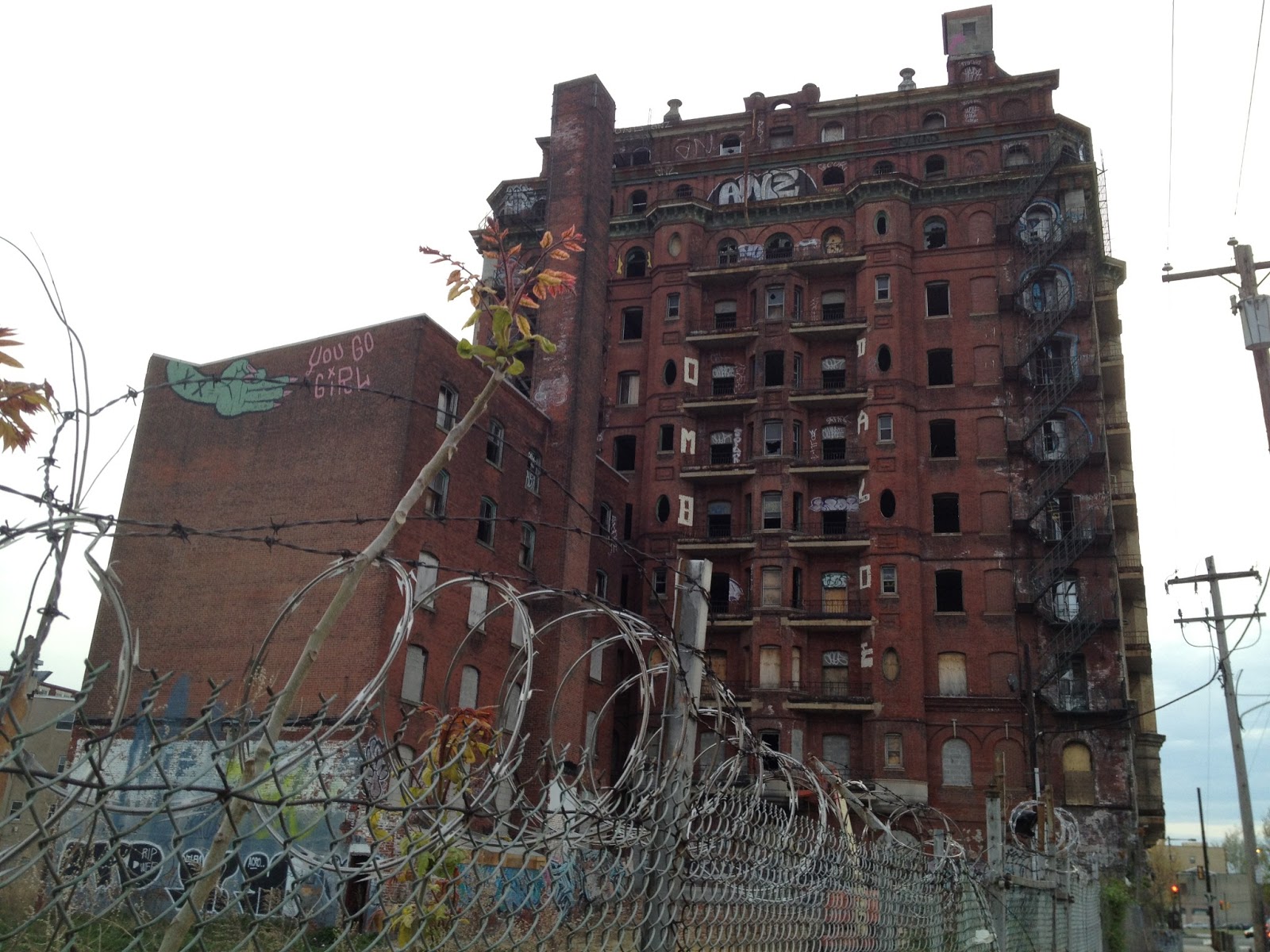 |
| Jamie Teich, The old Divine Lorraine Hotel, Philadelphia. |
I love this crusty decayed building. We walked all over Philadelphia during our two days there, passing it on our way to one of my favorite places, The Random Tea Room and Curiosity Shop on N. 4th Street. Their Masala Chai is amazing: "made every morning from scratch with love and devotion – no concentrate here! Hand-ground spices harmonize with Mapelhofe Farms whole milk, Harmutty Assam, fresh ginger, brown sugar, vanilla & rose water," according to their site. It's the perfect place to sit and enjoy the ritual of taking tea.
Washington, DC:
The Phillips Collection, May 2012Similar to the Barnes, the Phillips Collection is an intimate house museum. Opened in 1921 in Dupont Circle, it is America's first museum of modern art. Works of art are not organized by time or category so exploration is free. Some of the major highlights include:
Jacob Lawrence's The Migration Series (1940–41), a sequence of 60 paintings, depicts the mass movement of African Americans from the rural South to the urban North between World War I and World War II. The Phillips Collection and New York's Museum of Modern Art agreed to divide the collection. The Phillips owns the odd-numbered paintings.
Gauguin:
And the Rothko Room:
 |
| Jacob Lawrence, Panel No.1 |
 |
| Gauguin, Still Life with Ham, 1889. |
 |
| Colors! |
 |
| Phillips Collection, DC |
This Rothko Room is pretty great (the photo doesn't do justice), but it's no Rothko Chapel, which happens to be just a few sweet blocks away from my house!
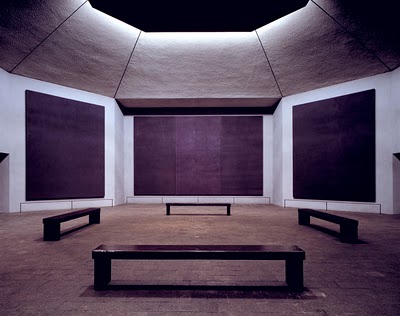 |
| Rothko Chapel, Houston, 1971. |


